Montell Jordan is the first artist I was ever disappointed in, and that’s maybe a bizarre way to remember someone. But maybe it’s not.
When “This Is How We Do It” came out, it was just so unbelievable and catchy and perfect and undeniable. I could barely stand it. Barely anybody could. Montell was tall and handsome, so that helped, because that always helps. And the name “Montell Jordan” is just a great name. But the song, which sort of fell over itself to be cool, but in the best way possible, was instantly likable. The only single that had a longer stay at no. 1 on Billboard’s Top 100 chart in 1995 was Mariah Carey’s “Fantasy,”1 and that should be an indicator of just how unstoppable “This Is How We Do It” was. More important than that, though: It was a true marker in history.
“This Is How We Do It” was a flawlessly executed new jack swing song, and it came at the perfect new jack swing moment, which is to say right as it became 100 percent OK for new jack swing and rap to commingle. Before then, back near the end of the ’80s when new jack swing became a thing, it stayed on the opposite side of the street from rap, derided by rappers as corny and pandering. But in the early ’90s, Andre Harrell, an ambitious and accomplished record executive, helped to blur the edges with Teddy Riley, who’d fathered the genre. “This Is How We Do It” was the tilt.
In 1996, Dr. Dre guest-featured on Blackstreet’s “No Diggity” — that was the next step in the coalescence. And then by 1997, Puff Daddy, who’d served under Andre Harrell at Uptown Records, mutated them into one single entity and obliterated everything; over a four-month stretch that year he had his sticky little fingers on the no. 1 song in the country 25 out of the 28 weeks. So “This Is How We Do It” was obviously the most fun song of 1995, but it was also (maybe) the most important too.
Showing posts with label Grantland. Show all posts
February 9, 2015
October 7, 2013
What We Learned From The Breaking Bad Finale
The Badfinger
is still playing, Jesse is still hollering, and, on the chilly floor of
a Nazi meth lab, Walt's body is still warm. Not nearly enough time has
passed to revisit Sunday's Breaking Bad finale in full. My thoughts on that remain more or less as they were in the wee hours of Monday morning:
A show that prided itself on exacting precision ended with an episode
as buffed, polished, and perfect as the inside of that TAG Heuer Walt
left atop a gas station pay phone. To some, that was ideal. To others, it was idealized. I have a feeling
that the argument — like the one raging in Flynn's head every morning
between the fluffy savoriness of eggs and the sweet surrender of
pancakes — will never end.
Which immediately sets it apart from Breaking Bad. The show is over. Life — and television — must somehow soldier on. Below are some thoughts on the three pressing issues left in the finale's wake.
October 3, 2013
80 Minutes Of Louis CK Talking To Bill Simmons
Taken from the BS Report earlier this year. If you've got a spare hour and change, and you like stuff that comes out of Louis CKs mouth, it's worth a watch.
August 7, 2013
The Compton Cricket Club. Actually.
"Giving Compton kids an alternative and an opportunity to do something other than basketball, baseball, football, hustling and gang banging"
May 11, 2013
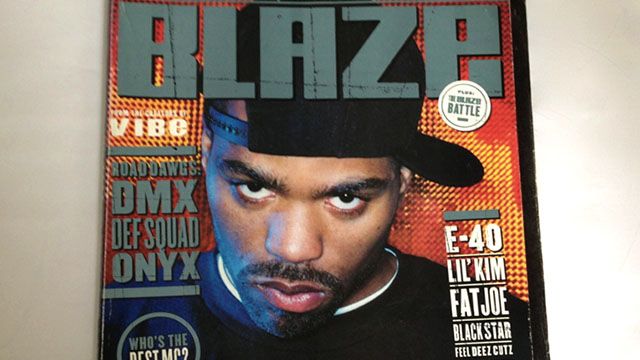
Remembering The '90s: Blaze Magazine's Premier Issue
This was an important magazine issue for four main reasons. One, it was the inaugural issue of Blaze Magazine, a 1998 Vibe/Spin Ventures production. Two, Method Man is on the cover, which is never bad. Three, the editor-in-chief's opening letter detailed a story of Wyclef Jean pointing a shotgun at him and threatening to kill him if he got a negative album review, which is very casual. And four, the issue had 120 pages of advertising, which is 53.1 percent of the magazine, which is a ton of ads.
Luckily, 120 pages of 1998 ads, most of which are clothing, is the opposite experience of sitting through a 30-second YouTube ad in 2013.
Subscribe to:
Posts (Atom)